On this page
- How do you tell whether a food is high in protein?
- How much protein do popular “healthy” foods have?
- Do avocado and banana count as protein foods?
- Is almond milk a source of protein?
- Does hummus have more protein than it seems?
- Are quinoa, oatmeal and peanut butter protein foods?
- Where do granola, chia seeds and cream cheese fit?
- Why does spinach look high per calorie but low per plate?
- What can you pair with foods that are not high in protein?
- Which foods without meat can supply the protein partner?
- How do you check a food that is not in the table?
- How can you log a food’s protein?
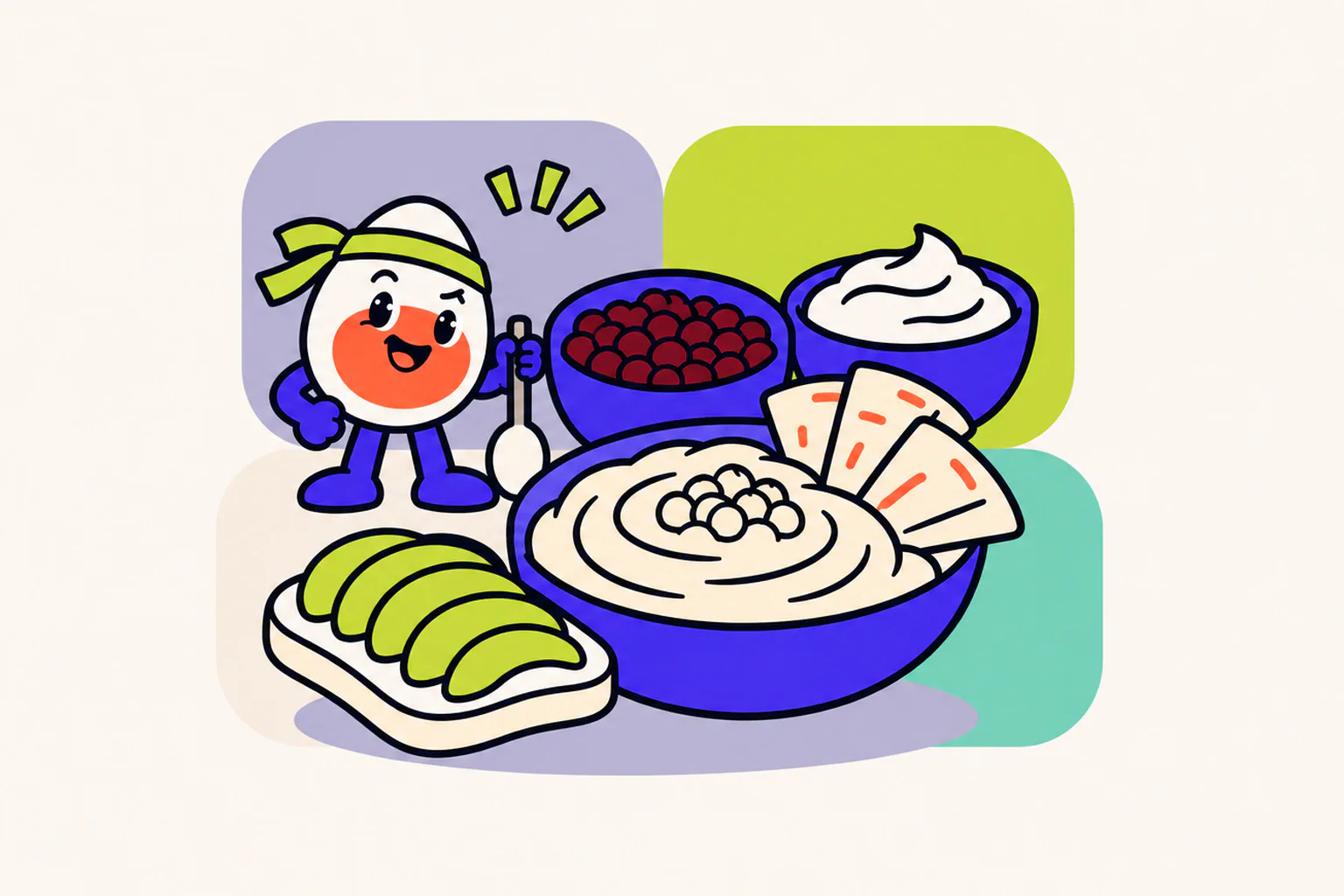
How do you tell whether a food is high in protein?
A food is high in protein when a normal portion gives you a meaningful share of your day’s grams without many calories coming along. Two numbers show that. Protein per portion is the grams in the amount you actually eat. Protein per 100 kcal is the grams that come with each 100 kilocalories, the unit a US label prints as “calories”.
Official label rules draw two lines. In the US, 21 CFR 101.54 lets a label say “high” for a nutrient when the reference amount customarily consumed (the standard portion the FDA sets for each food) has 20% or more of its Daily Value, and the FDA lists the Daily Value for protein as 50 g (page current as of March 2024). For ordinary foods intended for adults and children age 4 and older, that works out to at least 10 g of quality-adjusted protein. The protein percent Daily Value is adjusted for protein quality under 21 CFR 101.9, so lower-quality protein needs more than that. In the EU, Regulation (EC) No 1924/2006 allows “high protein” only when at least 20% of the food’s energy comes from protein. Protein gives about 4 kcal per gram, according to the FAO’s 2003 paper on food energy, so that is roughly 5 g of protein per 100 kcal.
This page uses 10 g per portion and 5 g per 100 kcal as rough yardsticks, not verdicts. The portions below are household portions, not label serving sizes. Reading a nutrition label for protein explains the claims in full.
How much protein do popular “healthy” foods have?
USDA FoodData Central (SR Legacy) gives the numbers below, listed from least to most protein per portion. The last two rows, a hard-boiled egg and roasted chicken breast, are there for scale. The last column asks a different question from the others: how many calories come along when you eat enough of the food to get 10 g of protein?
| Food | Protein | Calories | Protein per 100 kcal | Calories that come with 10 g of protein |
|---|---|---|---|---|
| Almond milk, unsweetened, shelf-stable1 cup (262 g) | 1.0 g | 39 kcal | 2.7 g | 380 kcal |
| Banana, raw1 medium (118 g) | 1.3 g | 105 kcal | 1.2 g | 820 kcal |
| Cream cheese2 tbsp (29 g) | 1.8 g | 102 kcal | 1.8 g | 570 kcal |
| Hummus, commercial2 tbsp (30 g) | 2.3 g | 71 kcal | 3.3 g | 300 kcal |
| Avocado, raw1 whole (201 g) | 4.0 g | 322 kcal | 1.3 g | 800 kcal |
| Chia seeds, dried1 oz (28 g) | 4.6 g | 136 kcal | 3.4 g | 290 kcal |
| Spinach, boiled, drained, without salt1 cup (180 g) | 5.3 g | 41 kcal | 13 g | 80 kcal |
| Oatmeal, cooked with water1 cup (234 g) | 5.9 g | 166 kcal | 3.6 g | 280 kcal |
| Peanut butter, smooth, without salt2 tbsp (32 g) | 7.1 g | 191 kcal | 3.7 g | 270 kcal |
| Quinoa, cooked1 cup (185 g) | 8.1 g | 222 kcal | 3.7 g | 270 kcal |
| Granola, homemade½ cup (61 g) | 8.3 g | 298 kcal | 2.8 g | 360 kcal |
| Egg, hard-boiled (for comparison)1 large (50 g) | 6.3 g | 78 kcal | 8.1 g | 120 kcal |
| Chicken breast, meat only, roasted (for comparison)3 oz (85 g) | 26 g | 140 kcal | 19 g | 50 kcal |
Read the last column as a comparison of how much food it takes to reach 10 g of protein. In this table, chicken, spinach and eggs bring 10 g of protein with the fewest calories. Peanut butter, quinoa, oatmeal, chia seeds, hummus, granola and almond milk sit in the middle. Cream cheese, avocado and banana bring the most calories for the same protein. In practice, portion size still matters: the foods above the egg row each provide less than 10 g in the portions shown. You can keep them as sides, spreads or toppings and add a protein partner. These comparisons describe protein amounts, not a food’s overall value.
Do avocado and banana count as protein foods?
Avocado and banana are fruits, and their numbers show it: USDA lists a whole avocado with about 4.0 g of protein and a medium banana with about 1.3 g. Their value lies elsewhere. USDA’s avocado row is the all-varieties entry, so Florida and California types, which differ in size and calories, will not match it exactly. The Dietary Guidelines for Americans 2025–2030, published by USDA and HHS in January 2026, list avocados among whole-food sources of healthy fats and ask people to eat a variety of colorful vegetables and fruits.
One easy way to use them is as a side. Half an avocado (100 g) with 2 hard-boiled eggs (100 g) has about 15 g of protein and 315 kcal, and 30-gram protein breakfasts has more morning combinations like it.
Is almond milk a source of protein?
Unsweetened almond milk has little protein: USDA FoodData Central (SR Legacy, 2018) lists about 1.0 g of protein in 1 cup (262 g). The same USDA source lists about 7.7 g in 1 cup (244 g) of whole cow’s milk and about 7.9 g in 1 cup (243 g) of original-and-vanilla, unfortified soy milk, and many soy milks are sweetened or fortified. Oat and pea milks differ by brand and by what is added, such as pea protein, and SR Legacy has no entry for them. In practice, the Nutrition Facts panel on the carton is the place to check.
Does hummus have more protein than it seems?
Commercial hummus is not low in protein by weight; the usual portion is what is small. USDA lists about 7.8 g of protein in 100 g of commercial hummus, close to the 8.9 g in 100 g of cooked chickpeas, its main ingredient. USDA’s home-prepared hummus has about 4.9 g in 100 g, so a store brand’s label is the better guide. A dip portion of 2 tbsp (30 g) has about 2.3 g, so a bigger scoop, or the chickpeas themselves, adds more.
Are quinoa, oatmeal and peanut butter protein foods?
Quinoa, oatmeal and peanut butter are grain and peanut foods that bring some protein along, and they help rather than lead. USDA lists about 8.1 g in 1 cup (185 g) of cooked quinoa, about 5.9 g in 1 cup (234 g) of cooked oatmeal and about 7.1 g in 2 tbsp (32 g) of smooth peanut butter. Peanut butter delivers its 7.1 g with 191 kcal, so 10 g of protein comes with about 270 kcal, against about 120 kcal from hard-boiled eggs. Plant protein basics covers how plant protein quality compares with animal protein.
Where do granola, chia seeds and cream cheese fit?
Granola, chia seeds and cream cheese are toppings and spreads, and their portions are small. USDA lists ½ cup (61 g) of homemade granola at about 8.3 g of protein and 298 kcal, 1 oz (28 g) of chia seeds at about 4.6 g and 136 kcal, and 2 tbsp (29 g) of cream cheese at about 1.8 g and 102 kcal. Packaged granola varies by brand, so the label beats the homemade record used here. The Dietary Guidelines for Americans 2025–2030 also list ready-to-eat or packaged breakfast options among the highly processed, refined carbohydrates to significantly reduce.
A food’s name is a poor guide to its protein. Cream cheese is a cheese, yet USDA lists about 10 g in 1 oz (28 g) of hard parmesan, against 1.8 g in the cream cheese portion above. The guide to how much protein is in cheese shows slices, sticks and spoonfuls by weight.
Why does spinach look high per calorie but low per plate?
Spinach shows why one measure is not enough. Cooked spinach has about 13 g of protein per 100 kcal, well above a hard-boiled egg’s 8.1 g, because it has very few calories. But 1 cup (180 g) of cooked spinach has about 5.3 g, so getting 10 g from spinach alone would take about 340 g, nearly 2 cups cooked. Spinach is a good vegetable that adds a few grams; it is not a protein plan on its own.
What can you pair with foods that are not high in protein?
A protein partner lets you keep a food you enjoy while adding protein elsewhere in the meal. These are serving ideas, not rules or calculated meal totals. The portions come from the USDA SR Legacy (2018) records used above.
| Food you want to keep | One next step |
|---|---|
| Unsweetened almond milk1 cup (262 g) | Keep it as your drink and serve an egg alongside breakfast; or compare protein in milk and plant milks before choosing a different carton. |
| Cream cheese2 tbsp (29 g) | Keep the spread on toast and add a hard-boiled egg on the side. |
| Commercial hummus2 tbsp (30 g) | Keep the dip and serve it with the roasted chicken portion above, or add cooked chickpeas to the meal. |
| Oatmeal, cooked with water1 cup (234 g) | Keep the oats and have whole milk or soy milk alongside; check the carton’s protein and the amount you pour. |
| Smooth peanut butter, without salt2 tbsp (32 g) | Keep the spread and use the whole-milk pairing below. Other nut butters need their own label check. |
Which foods without meat can supply the protein partner?
Eggs, dairy and soy foods are options without meat; beans, peas and lentils are plant options. The 2025–2030 Dietary Guidelines name these among protein or dairy choices. A practical next step is to choose one you eat and check its portion in the high-protein foods chart. Hummus and peanut butter already contribute protein, so count that contribution too.
The Dietary Guidelines for Americans 2025–2030 give most of them a job. They list avocados among whole-food sources of healthy fats, ask for a variety of colorful vegetables and fruits, and name beans, peas, lentils, legumes, nuts, seeds and soy among plant-sourced protein foods. In practice, bananas and spinach fall in the vegetables-and-fruits group. This suggests hummus, peanut butter and chia seeds count as plant protein foods in the Guidelines’ sense, in modest amounts. For a fish option, protein in salmon covers portions and raw versus cooked weights.
- Keep the spread; add a drink. 2 tbsp (32 g) of peanut butter with 1 cup (244 g) of whole milk gives about 15 g of protein and 340 kcal.
- Build around the main protein. 1 cup (185 g) of cooked quinoa with 3 oz (85 g) of roasted chicken breast gives about 35 g of protein and 362 kcal.
- Keep eggs in mind. How much protein is in an egg covers sizes and cooking.
How do you check a food that is not in the table?
Branded foods vary, and SR Legacy usually has no value for them, so read the Nutrition Facts panel. Divide the grams of protein by the calories and multiply by 100 to get protein per 100 kcal; the protein-to-calorie ratio rule shows one way to use that number. Foods that lead on both measures are in the high-protein foods chart.
Calorie comparisons are optional. If you have a history of disordered eating, skip calorie counting and talk with a clinician about a suitable approach. The National Institute of Mental Health explains eating disorders and care; tracking protein without counting calories offers another approach.
The same Guidelines set a protein serving goal of 1.2–1.6 grams of protein per kilogram of body weight per day. How much protein you need explains where your own number falls, and the protein calculator gives a starting figure. If you have kidney disease, are pregnant or follow a medically managed diet, talk to your care team before changing how much protein you eat.
For a next step, try easy ways to add about 10 grams of protein.
How can you log a food’s protein?
YolkPal is an iPhone protein tracker: protein first, calories only if you want them. You can scan a barcode or let it read a nutrition label to log a packaged food, and photograph a plate or type the grams for the rest. AI results are estimates that you check and edit before saving, and foods you eat often can be saved. To start tracking, read how to track protein without counting calories.
Sources
- USDA FoodData Central, SR Legacy (April 2018): FDC 174832 (almond milk, unsweetened), 173944 (banana), 173418 (cream cheese), 174289 (hummus, commercial), 171705 (avocado), 170554 (chia seeds), 168463 (spinach, cooked), 173905 (oatmeal, cooked), 172470 (peanut butter, smooth), 168917 (quinoa, cooked), 171646 (granola, homemade), 173424 (egg, hard-boiled), 171477 (chicken breast, roasted), 171265 (whole milk), 172446 (soy milk, original and vanilla, unfortified), 173757 (chickpeas, cooked), 170848 (parmesan, hard), 172454 (hummus, home prepared). fdc.nal.usda.gov
- USDA and HHS. Dietary Guidelines for Americans, 2025–2030. January 2026. realfood.gov/documents/DGA.pdf
- U.S. Government Publishing Office. 21 CFR 101.54, Nutrient content claims for “good source,” “high,” “more,” and “high potency.” Electronic Code of Federal Regulations, read November 2026. ecfr.gov
- U.S. Food and Drug Administration. Daily Value on the Nutrition and Supplement Facts Labels. Content current as of March 5, 2024. fda.gov
- U.S. Government Publishing Office. 21 CFR 101.9, Nutrition labeling of food, paragraph (c)(7) on protein. Electronic Code of Federal Regulations, read November 2026. ecfr.gov
- European Parliament and Council. Regulation (EC) No 1924/2006 on nutrition and health claims made on foods, Annex. eur-lex.europa.eu
- Food and Agriculture Organization of the United Nations. Food energy: methods of analysis and conversion factors, FAO Food and Nutrition Paper 77, 2003, chapter 3 (Atwater general factors). fao.org
- National Institute of Mental Health. Eating Disorders: What You Need to Know. Read November 12, 2026. nimh.nih.gov
This article is general information, not medical advice. If you have a health condition, are pregnant, or follow a diet set by your doctor, talk to them or a registered dietitian before changing how you eat.