On this page
- How much protein is in a cooked haggis portion?
- How do you convert a per-weight value to your serving?
- How much protein is in veggie haggis?
- What do neeps, tatties and sauce add to the plate?
- How do you log homemade or restaurant haggis?
- What should you check when serving haggis?
- How does haggis fit a Burns Night meal?
Protein in haggis is best estimated from the finished dish and the portion you eat. For a cooked reference, this page uses CoFID’s 2021 “Haggis, boiled” record, rather than a liver-only entry or the value for dry oats. Keep the meat and vegetarian versions under the same question, but give each its own food entry when logging.
How much protein is in a cooked haggis portion?
Cooked haggis portions can be scaled from the UK reference record. CoFID’s 2021 spreadsheet lists food code 19-132, “Haggis, boiled”; its protein value rounds to about 11 g per 3½ oz (100 g). The portions below are chosen examples, not serving recommendations.
| Boiled haggis, edible cooked weight | Approximate protein |
|---|---|
| Small portion, about 1.8 oz (50 g) | 5.4 g |
| Reference amount, about 3½ oz (100 g) | 11 g |
| Example main portion, about 5.3 oz (150 g) | 16 g |
| Larger example, about 7.1 oz (200 g) | 21 g |
The reference record describes a finished food. It does not tell you the exact recipe or nutrition of a haggis from a particular butcher, a homemade batch or a restaurant. The spreadsheet identifies older underlying data reviewed in 2013; “2021” is the dataset edition, not a claim that every haggis was sampled that year.
In practice, you can use this row when a closer match is unavailable. If a package provides different values, choose that package rather than averaging its panel with the reference. For comparisons with other foods, use the high-protein foods chart.
How do you convert a per-weight value to your serving?
Protein in a serving equals the reference protein multiplied by the serving weight, divided by the reference weight. The weights must describe the same state: cooked with cooked, or as sold with as sold. Here is the worked conversion for the cooked haggis in CoFID 2021:
- Use the source’s input: 10.7 g protein per 3½ oz (100 g) of boiled haggis.
- Weigh the edible cooked haggis alone: about 5.3 oz (150 g) in this example.
- Multiply 10.7 × 150 ÷ 100 = 16.05, then round once to about 16 g of protein.
Use the metric weights for this calculation; the ounce equivalents above are rounded for readability. Multiplying the already-rounded headline value can give a different answer at the rounding boundary. Keeping the original source value until the last step avoids that problem.
A package may instead give protein per portion. Use that portion’s stated weight as the divisor, then multiply by the weight you actually eat. Check whether the panel includes suggested accompaniments or refers only to the haggis. The guide to reading a nutrition label for protein covers the broader label-reading process.
How much protein is in veggie haggis?
Vegetarian haggis varies by recipe, including the mix of vegetables, oatmeal and pulses, meaning beans, lentils and similar foods. CoFID 2021 has a boiled meat-haggis record but no vegetarian haggis entry. Read your pack’s protein per 100 g and check whether the panel describes the food as sold or after preparation. Use that label rather than assigning the meat-haggis reference to a vegetarian recipe.
An as-sold value cannot be assigned automatically to an equal weight after heating. A generic meat-haggis record cannot establish whether a particular vegetarian recipe has more or less protein. The formulations and measurement states can differ. You can compare products fairly by checking the same weight basis on each panel.
| Version and source | Which weight matches? | How to use it |
|---|---|---|
| Meat haggis, CoFID 2021 boiled record | Edible cooked haggis | Use the cooked portion table above |
| Your vegetarian haggis package | The state named on its panel | Read the pack’s protein value and match your weighed portion to that state |
| Your own meat or vegetarian package | The state named on its panel | Use its protein and portion information in preference to a generic estimate |
For a whole packaged haggis, you can calculate the protein in the edible product before heating, then divide that total by the finished batch weight and multiply by your cooked portion. Treat that method as an estimate assuming the nutrients stay in the batch. Discarded filling or substantial cooking losses make the assumption less reliable. Keep any sauce or added ingredients outside that calculation unless you include them in the batch total.
What do neeps, tatties and sauce add to the plate?
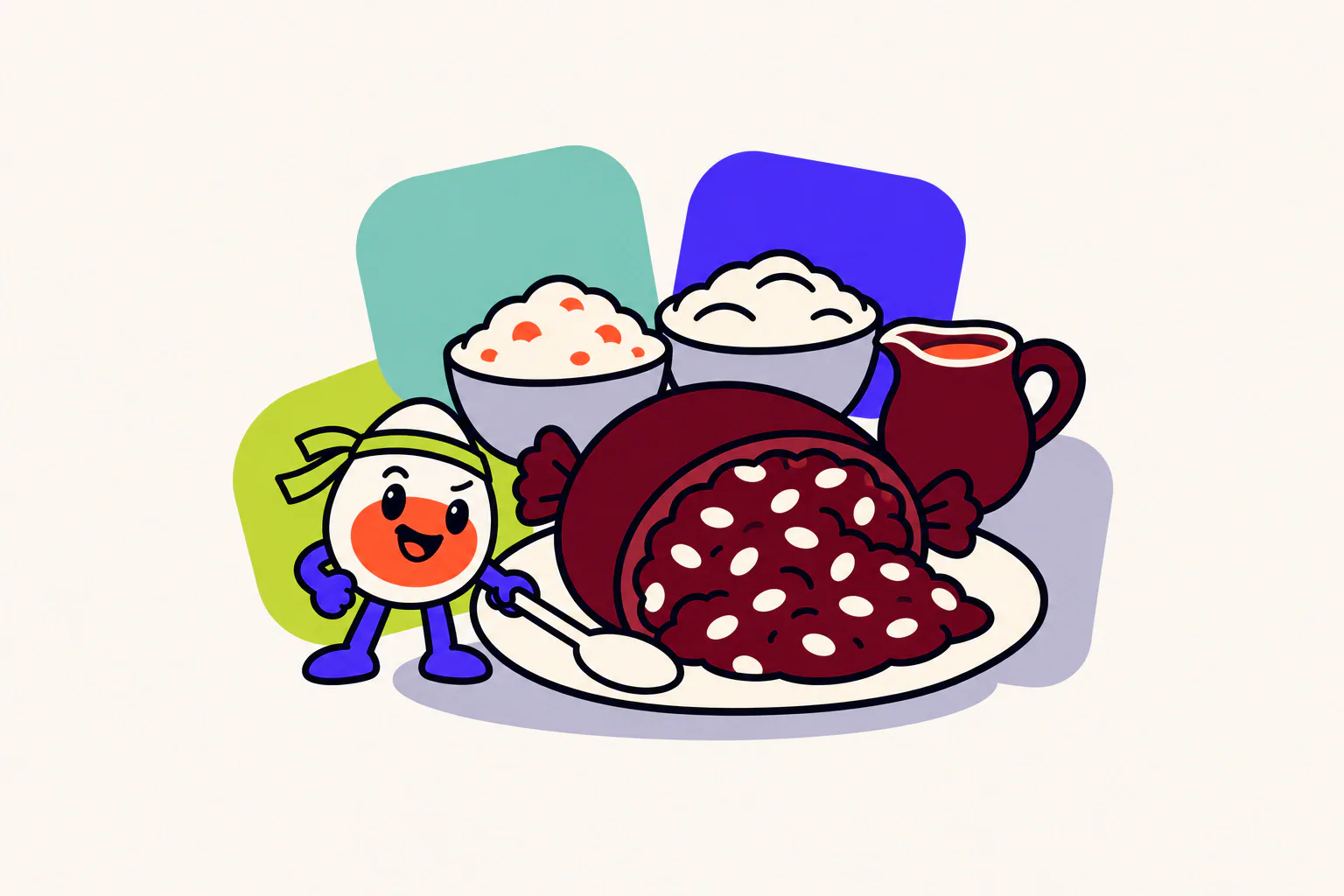
Haggis, neeps and tatties need separate entries because their protein values differ. For this calculated plate, neeps means swede, also called rutabaga, and tatties means potato. The example uses plain boiled vegetables mashed without additions. It is a logging illustration, not a kitchen-tested recipe.
The haggis comes from CoFID 2021. The vegetable values come from USDA FoodData Central’s boiled rutabaga record and its peeled boiled potato record, both SR Legacy, April 2018. The datasets are deliberately identified separately; neither vegetable record describes a mash containing milk, butter or cream.
| Plate component | Edible cooked amount | Approximate protein |
|---|---|---|
| Boiled haggis, CoFID 19-132 | About 5.3 oz (150 g) | 16 g |
| Plain boiled rutabaga, USDA FDC 168455 | About 3½ oz (100 g) | 0.9 g |
| Plain peeled boiled potato, USDA FDC 170440 | About 5.3 oz (150 g) | 2.6 g |
| Subtotal before sauce or mash additions | About 14.1 oz (400 g) | 20 g |
| Sauce, butter, milk, cream or other additions | Measure separately | Not included; add the matching label or recipe values |
In practice, the haggis supplies most of the protein in this particular example. The vegetables still belong in the log, but their combined weight should not be entered as extra haggis. If your mash includes other ingredients, use a matching prepared-mash entry or calculate the recipe instead of calling it plain boiled potato.
For vegetarian haggis, keep the same separate vegetable entries and replace only the haggis entry. If you want another protein food alongside the meal or elsewhere in the day, the guide to easy ways to add protein to meals offers options. You do not need to change a traditional recipe to make its contribution count.
How do you log homemade or restaurant haggis?
Homemade haggis is best logged as a recipe when you know the ingredients and finished yield. Record the edible ingredient weights, match each to its raw or cooked database entry, and weigh the finished batch. Divide the recipe’s total protein by that final weight to get protein per unit of cooked food, then apply your serving weight.
A liver entry alone cannot represent a mixed offal-and-oat dish. Offal means organ meats; a recipe may combine different organs and other ingredients. Adding up the actual recipe keeps the proportions visible. If you cannot verify those ingredients, the boiled reference is an openly approximate fallback, not a reconstruction of someone’s family recipe.
At a restaurant, you can ask whether nutrition information describes the haggis alone or the plated meal. If no information is available, estimate the haggis portion separately from the sides and sauce. A slice or scoop has no fixed weight. Save the estimate with its uncertainty instead of treating an unweighed restaurant plate as a precise food record.
What should you check when serving haggis?
Haggis preparation should follow the instructions for the product you bought. For storage and serving, FoodSafety.gov’s food-safety guidance (reviewed 2023) says to keep cooked food hot at 140°F (60°C) or above, refrigerate perishables within 2 hours, or within 1 hour above 90°F (32°C), and put leftovers in shallow containers and refrigerate promptly.
Pregnancy needs a separate ingredient check. The NHS foods-to-avoid guidance, checked November 2026, advises avoiding liver and liver products during pregnancy because of their vitamin A content. If your haggis contains liver, follow that advice and discuss suitable alternatives with your care team. A protein total does not settle whether a food is appropriate during pregnancy.
If you have kidney disease or follow a medically managed diet, ask your care team how the food fits your plan. For anyone under 18, a pediatric clinician or dietitian can advise on an appropriate protein target. Check the actual package for allergens and dietary suitability rather than relying on the word “vegetarian.”
How does haggis fit a Burns Night meal?
A Burns Night meal can keep its traditional centerpiece while you estimate its protein. Scotland’s tourism authority describes Burns Night on January 25 and haggis with neeps and tatties as a traditional supper centerpiece (official visitor guidance, checked November 2026). Households and hosts have their own recipes and serving styles; the portions here are arithmetic examples, not a definition of an authentic supper.
Your next step is to check the package or choose the boiled reference, weigh only the haggis portion, then add sides separately. For a personal starting point, see how much protein you need or use the protein calculator to put the meal in the context of your day.
Sources
- Public Health England. McCance and Widdowson’s Composition of Foods Integrated Dataset (CoFID), 2021. Updated March 19, 2021. Spreadsheet tab “1.3 Proximates,” food code 19-132, “Haggis, boiled”: protein 10.7 g per 100 g; tab “1.1 Notes” gives the weight basis. Dataset and user guide; 2021 data spreadsheet.
- USDA FoodData Central, SR Legacy, April 2018. Rutabagas, cooked, boiled, drained, without salt (FDC 168455); potatoes, boiled, cooked without skin, flesh, without salt (FDC 170440). FoodData Central.
- FoodSafety.gov. 4 Steps to Food Safety. Reviewed September 18, 2023; checked November 12, 2026. Food-safety guidance.
- NHS. Foods to avoid in pregnancy. Checked November 12, 2026. Pregnancy food guidance.
- VisitScotland. Burns Night in Scotland. Checked November 12, 2026. Burns Night guide.
This article is general information, not medical advice. If you have a health condition, are pregnant, or follow a diet set by your doctor, talk to them or a registered dietitian before changing how you eat.