On this page
What goes into the pasta salad?
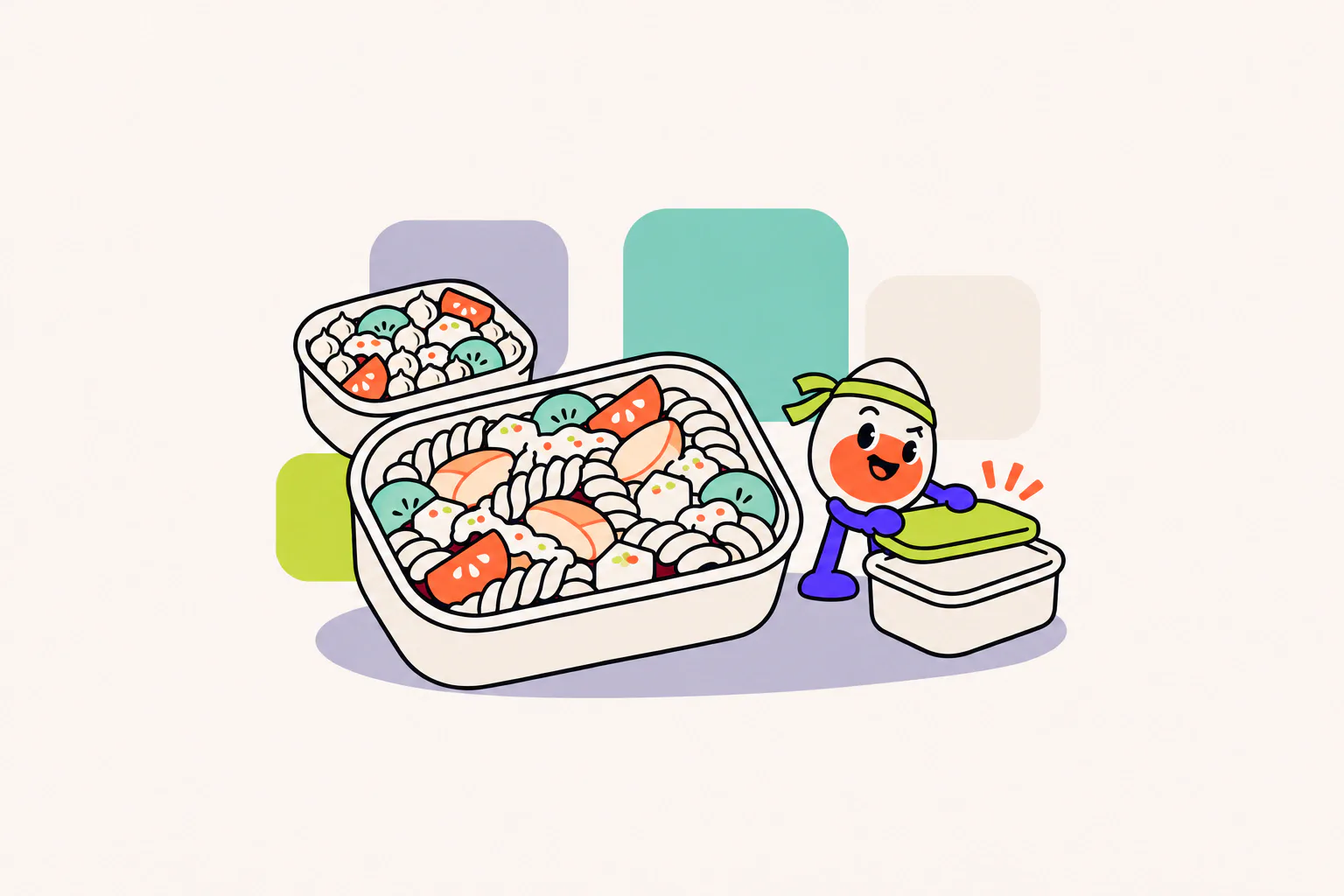
High protein pasta salad starts with a shared base and has a choice of fillings. The chicken version uses roasted breast; the vegetarian version uses chickpeas with the same dairy-containing base. Choose either filling, rather than adding both amounts to the bowl. Short pasta such as rotini, elbows or small shells is an option for easy mixing.
These are calculated recipe designs, not kitchen-tested recipes. Nutrition estimates use USDA FoodData Central’s SR Legacy entries (2018), checked November 11, 2026. Household measures are approximate; use the gram weights for the calculation. There is no measured cooking time or tested finished yield. The method below lets you determine your own yield.
| Shared ingredient | Amount for the whole batch | Preparation state |
|---|---|---|
| Regular enriched pasta | 8 oz (224 g) | Dry, before boiling |
| Cherry tomatoes | 2 cups (298 g) | Raw; measure whole, then halve |
| Cucumber with peel | 2 cups sliced (208 g) | Raw, then chopped |
| Feta | 4 oz (112 g) | Crumbled or diced |
| Plain nonfat Greek yogurt | About 1 cup (240 g) | As sold |
| Olive oil | 2 tbsp (27 g) | For dressing |
| Lemon juice | ¼ cup (61 g) | Fresh juice |
Chicken filling: Add 12 oz (340 g) cooked, skinless roasted chicken breast, diced. That is the cooked edible amount, with skin and bones excluded; it is not a raw shopping weight.
Vegetarian filling: Add 4 cups (656 g) chickpeas cooked from dry without salt, drained and cooled. Canned chickpeas are convenient, but use their label and the drained amount you actually add to recalculate. For the vegetarian version, use feta labeled suitable for vegetarians, made with vegetarian rennet.
The vegetarian batch is larger because the chickpea filling weighs more than the chicken filling. A quarter of either recipe is a substantial bowl. You can split the batch into smaller portions or serve it as a side; neither recipe defines how large your lunch must be.
How do you assemble and cool the salad?
The salad can be assembled from chilled cooked ingredients so the yogurt dressing goes onto cool pasta. USDA FSIS’s Leftovers and Food Safety guidance (2020, read November 2026) recommends rapid cooling in shallow containers and says hot food can go directly into the refrigerator.
- Prepare the filling. If cooking chicken from raw, use a food thermometer. FoodSafety.gov’s temperature chart (reviewed 2024) gives 165°F (74°C) for poultry. Cool promptly in shallow containers, then weigh the cooked portion. For the vegetarian branch, drain cooked chickpeas and chill promptly.
- Boil the pasta. Start with the dry quantity in the ingredient table. Follow the package’s cooking directions, then drain thoroughly. You can rinse briefly under cold running water to help stop cooking; drain again. Divide into shallow containers and refrigerate promptly. Do not leave a deep bowl on the counter waiting to become cold.
- Prepare the vegetables and dressing. Wash the produce, halve the tomatoes and chop the cucumber. Whisk the yogurt, lemon juice and oil together. Pepper, dried herbs or chopped fresh herbs are optional; they are excluded from the nutrition estimates.
- Combine cold ingredients. Mix pasta, vegetables and your chosen filling, fold in feta, then stir in all the dressing. Use clean utensils and keep raw poultry equipment away from the ready-to-eat salad, following USDA FSIS’s 2025 bag-lunch guidance.
- Weigh and divide. Weigh the complete cooled salad, subtracting the container weight. Mix thoroughly before dividing, and distribute visible chicken or chickpeas evenly. Refrigerate the portions promptly.
If you prefer to carry dressing separately, divide both the salad and dressing into the same number of portions. Include a share of each when logging the meal. The whole-batch estimates below include all the dressing, so leaving some behind changes what you eat.
How much protein is in each version?
The chicken batch supplies about 179 g of protein, and the chickpea batch about 132 g, using the listed weights and USDA SR Legacy (2018). Divide the unrounded ingredient totals by the number of equal portions before rounding. The table shows meal-sized quarters and smaller sixths.
| Version | Whole-batch protein | One quarter | One sixth |
|---|---|---|---|
| Chicken, with the shared base | About 179 g | About 45 g | About 30 g |
| Chickpea, with the shared base | About 132 g | About 33 g | About 22 g |
The calculation assumes the listed ingredients are eaten and uses dry pasta’s nutrient content without a cooking-loss adjustment. Actual products, draining losses and unevenly distributed fillings can change the result. Water absorbed during boiling changes the batch’s weight; it does not add protein. Recording dry pasta and then recording the same cooked pasta again would double-count it.
Calories are optional, and this guide leaves them out. You can use a protein estimate without setting a calorie target. If you need a daily reference before choosing portions, the protein calculator can help you explore an adult starting target. A meal idea is not a personalized protein prescription.
Why weigh the full salad after cooling?
The cooled salad’s total weight connects the ingredient calculation to the amount in your lunch box. Do not use the dry pasta weight as the finished salad yield. Do not use the drained pasta weight alone either: the vegetables, filling, feta and dressing also belong in the finished weight.
Equal portions: Divide the actual cooled batch weight by the number of containers. Each container then receives that fraction of the batch’s estimated protein, provided you have distributed the ingredients evenly.
A weighed scoop: Multiply the batch’s unrounded protein total by the scoop’s weight divided by the full salad’s weight. Use the same weight unit for both. This is useful when you serve different amounts rather than filling identical lunch boxes.
| Hypothetical chicken batch | Quarter-batch weight | Protein in a 10.6 oz (300 g) scoop |
|---|---|---|
| About 4 lb (1,800 g) after cooling | About 1 lb (450 g) | About 30 g |
| About 4.4 lb (2,000 g) after cooling | About 1.1 lb (500 g) | About 27 g |
Both hypothetical batches still give about 45 g of protein in a quarter. The heavier batch has less protein in the same weighed scoop because that scoop represents a smaller fraction of the whole. Extra vegetables or dressing are ingredient changes, so recalculate their nutrients as well as weighing the new batch.
A cup measure is less reliable for this purpose because the amount fitting into it depends on pasta shape and how the salad is packed. You can still serve by eye when that suits you. Treat the estimate as approximate rather than weighing every meal if measuring adds stress.
How do you substitute a protein pasta?
A protein-pasta substitution starts with the label on the box you will cook. The FDA’s Nutrition Facts guide (2024) explains that nutrient amounts refer to the label’s serving size. Check whether that serving is dry or prepared before using it.
- For a dry serving label, divide the dry weight you will cook by the label’s dry serving weight. Multiply that result by the protein listed per serving.
- Remove the regular pasta contribution from this recipe’s batch estimate. USDA SR Legacy (2018) gives about 29 g of protein for the whole batch’s dry pasta amount. Use the unrounded calculation when recalculating.
- Add your replacement pasta’s label-based protein, keeping the other ingredients unchanged unless you also substitute them.
- Cook according to that pasta’s package, drain, chill and weigh the entire new salad. Recalculate portions from the new batch weight.
Do not multiply a dry-serving label by a cooked pasta weight. If a label only provides prepared values, follow its preparation basis or find the dry information from the manufacturer. The guide to reading a nutrition label for protein walks through serving arithmetic. For a broader comparison of taste, cost and ingredients, see whether protein pasta is worth it.
How long can pasta salad stay in a lunch box or fridge?
Pasta salad needs refrigeration in both versions. FoodSafety.gov’s cold-storage chart, read November 2026, lists 3–4 days for chicken and macaroni salads at 40°F (4°C) or below. This is general storage guidance, not a validated shelf life for this particular recipe. Use earlier ingredient deadlines; mixing older cooked chicken into a fresh salad does not restart its storage clock.
USDA FSIS’s 2025 bag-lunch guidance recommends an insulated bag with at least two cold sources. Keep the salad refrigerated until leaving, place cold sources above and below the container, and refrigerate at work on arrival when possible. Pack what you expect to eat and discard perishable lunch leftovers as that guidance advises.
USDA FSIS’s Leftovers and Food Safety guidance (2020) says to discard perishables left out for more than 2 hours, or 1 hour when the temperature is above 90°F. That includes preparation, transport and serving time without safe cold holding. Lemon dressing does not remove the need to keep this salad cold. For more cold-meal choices, use high-protein lunches for work.
What should you adjust before making a batch?
Pasta salad portions can change with your appetite, other meals and dietary needs. Both branches contain wheat and dairy as written; check every replacement’s label for your own allergies or restrictions. Replacing feta, yogurt or pasta changes the nutrition calculation. For kidney disease, pregnancy or a medically managed diet, ask your care team about protein amounts and suitable ingredients. Readers under 18 should ask a clinician or dietitian before using adult protein targets.
For your next lunch, choose a filling, make the shared base and write down the cooled batch weight before portioning. If you would rather adjust a meal you already cook, explore easy ways to add protein to everyday meals. For other chicken, tuna, egg or tofu salads, see more high-protein salads.
Sources
- USDA FoodData Central. SR Legacy, April 2018; checked November 11, 2026. Pasta, dry, enriched (FDC 169736); chicken breast, meat only, cooked, roasted (171477); chickpeas, mature seeds, cooked, boiled, without salt (173757); feta cheese (173420); plain nonfat Greek yogurt (170894); cucumber with peel, raw (168409); red ripe tomatoes, raw (170457); olive oil (171413); raw lemon juice (167747). FoodData Central.
- U.S. Food and Drug Administration. How to Understand and Use the Nutrition Facts Label. March 2024. FDA label guide.
- USDA Food Safety and Inspection Service. Keeping “Bag” Lunches Safe. Updated July 25, 2025. USDA lunch-packing guidance.
- USDA Food Safety and Inspection Service. Leftovers and Food Safety. Updated July 31, 2020; read November 11, 2026. USDA cooling and storage guidance.
- FoodSafety.gov. Cold Food Storage Chart. Read November 11, 2026. Cold storage chart.
- FoodSafety.gov. Cook to a Safe Minimum Internal Temperature. Reviewed November 21, 2024. Cooking temperature chart.
This article is general information, not medical advice. If you have a health condition, are pregnant, or follow a diet set by your doctor, talk to them or a registered dietitian before changing how you eat.