
On this page
- Which slow-cooker meal should you make?
- What ingredients are counted in each batch?
- How do you make chicken and chickpea tomato stew?
- How do you make turkey and kidney bean chili?
- How do you make tofu, red lentil and spinach soup?
- How do you measure the finished batch and serving mass?
- How do you thaw, hold and store slow-cooker meals safely?
- What should you record for the next batch?
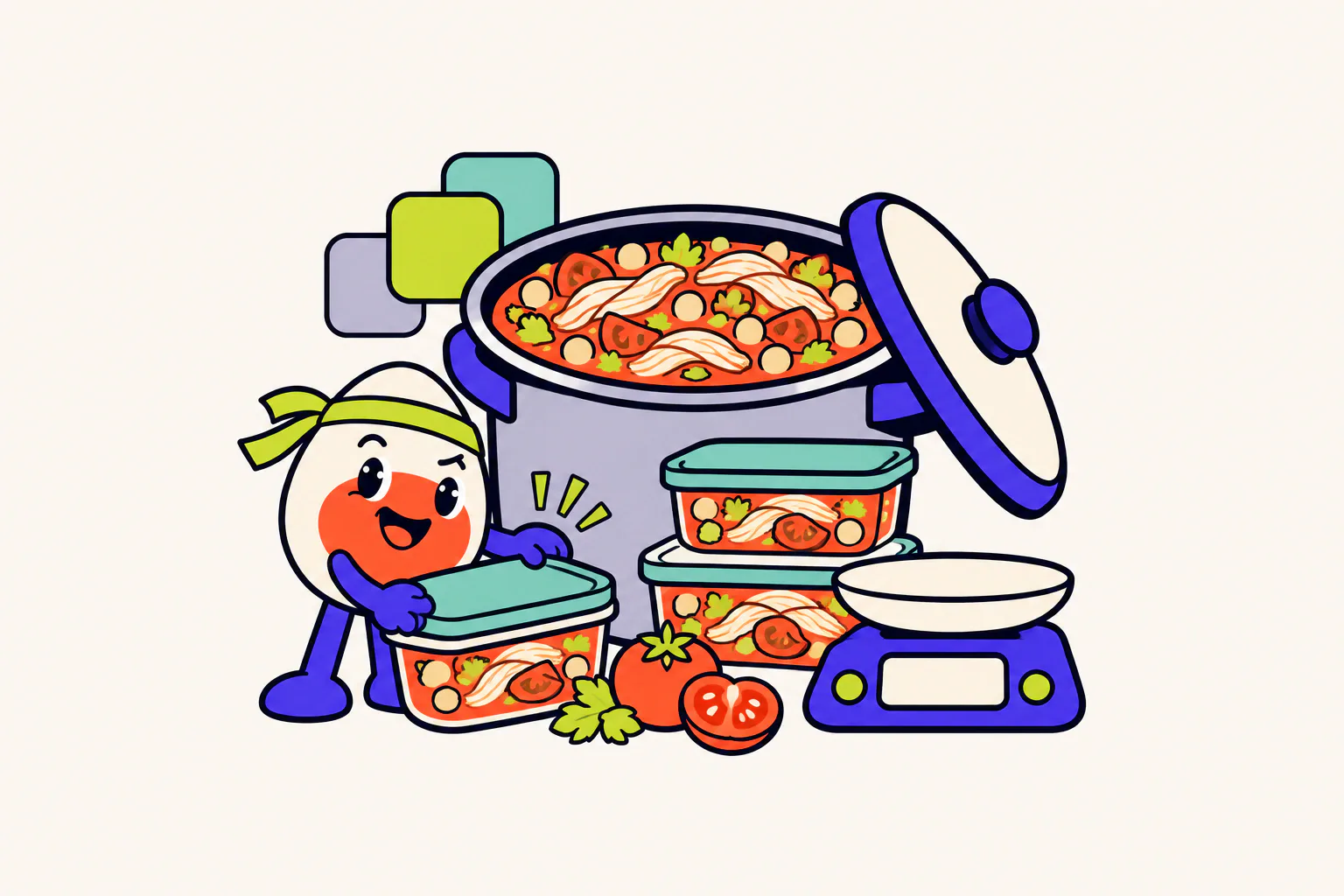
Which slow-cooker meal should you make?
High protein slow cooker meals can start with the protein food you want to eat and a serving size that suits your appetite. The chicken and turkey options below use canned legumes, while the plant-based option combines tofu with dry red lentils. All nutrition estimates use USDA FoodData Central’s SR Legacy dataset (2018), checked November 11, 2026.
Choose chicken for a shredded tomato stew, turkey for a chunky chili or tofu for a lentil soup. Each batch is designed to be divided into 6 servings. That is a recipe division you can change. For help choosing a daily amount, read how much protein you need or use the protein calculator.
| Meal | Estimated batch protein | Estimated protein per serving | Serving definition |
|---|---|---|---|
| Chicken and chickpea tomato stew | 253 g | 42 g | Finished batch weight divided by 6 |
| Turkey and kidney bean chili | 223 g | 37 g | Finished batch weight divided by 6 |
| Tofu, red lentil and spinach soup | 220 g | 37 g | Finished batch weight divided by 6 |
For meals prepared by other methods, see the easy high-protein dinners guide. Here the focus is the cooker, the liquid you keep and the mass of the whole batch. For a broader comparison of ingredients, use the high-protein foods chart.
What ingredients are counted in each batch?
The ingredient ledger fixes the food and preparation state behind each estimate. Meat is weighed raw, legumes from cans are weighed after draining, lentils are weighed dry, and tofu is weighed after pouring away its packaging liquid. Use the metric weights for the calculation. The US measures are approximate shopping or measuring guides.
| Ingredient and state | Amount per batch | Protein in that amount | Used in |
|---|---|---|---|
| Skinless boneless chicken breast, raw | About 2 lb (900 g) | 203 g | Chicken stew |
| Ground turkey, 93% lean, raw | About 2 lb (900 g) | 169 g | Turkey chili |
| Firm tofu, prepared with calcium sulfate | About 2 lb (900 g) | 155 g | Tofu soup |
| Canned chickpeas, drained solids | About 17.6 oz (500 g) | 35 g | Chicken stew |
| Canned red kidney beans, drained solids | About 17.6 oz (500 g) | 40 g | Turkey chili |
| Crushed canned tomatoes, including liquid | About 28.2 oz (800 g) | 13 g | Chicken stew and turkey chili, separately |
| Chopped onion, raw | 1 cup (160 g) | 1.8 g | Every batch, separately |
| Red lentils, dry | 1¼ cups (240 g) | 57 g | Tofu soup |
| Spinach, raw | About 7 oz (200 g) | 5.7 g | Tofu soup |
Water is the cooking liquid used in these proposals. Salt, pepper, herbs, spices, optional oil, garnishes and side dishes are excluded from the nutrition estimates. Record any substantial additions when calculating your version. Tofu varies considerably between products, so compare your label with the reference entry before relying on its estimate.
How do you make chicken and chickpea tomato stew?
Chicken and chickpea stew uses the ledger’s chicken breast, chickpeas, tomatoes and onion, with water added to suit the cooker’s stew instructions. Keep the sauce in the finished meal because the calculation assumes the whole batch is eaten.
- Thaw the chicken fully in the refrigerator. Keep it refrigerated until preparation time. Begin with a clean cooker, utensils and work surface.
- Put the chopped onion in the cooker first. Add the drained chickpeas, crushed tomatoes and thawed chicken. Add water according to the appliance’s instructions for a stew of this size. You can season with smoked paprika, black pepper and dried oregano.
- Start cooking immediately on the setting specified by the appliance’s poultry-stew instructions. Keep the lid on except to check doneness. USDA FSIS’s slow-cooker guidance (2013) supports thawed poultry and moist dishes such as stews.
- Check the thickest chicken pieces with a food thermometer. FoodSafety.gov’s chart (reviewed 2024) sets the minimum for poultry at 165°F (74°C). Continue cooking until the onion is tender too.
- Shred the cooked chicken, return it to the sauce and mix thoroughly. Weigh and divide the finished batch using the method below.
Chicken stew can be served as a bowl or with bread, potatoes or rice. Count a side separately if you are recording protein. Keep the shredded chicken distributed through the sauce while portioning so the containers have a similar balance of meat and chickpeas.
How do you make turkey and kidney bean chili?
Turkey chili combines the ledger’s ground turkey, kidney beans, tomatoes and onion. The turkey is weighed raw for the ingredient calculation, then browned immediately before it goes into the cooker.
- Cook the thawed turkey in a skillet, breaking it into small pieces. Use a little water to prevent sticking if needed. FoodSafety.gov (2024) gives 165°F (74°C) as the minimum internal temperature for ground poultry. Verify that temperature with a food thermometer before transferring the turkey.
- Transfer the cooked turkey and its pan juices directly into the slow cooker with the onion, drained canned kidney beans and tomatoes. Add water as required by your appliance’s chili instructions. You can season with cumin, chili powder and black pepper.
- Cook on the appliance’s recommended chili setting with the lid in place until the onion is tender and the mixture is thoroughly hot. Stir before checking temperature in several places.
- Retain the liquid, mix well and weigh the completed batch. Divide both the solids and sauce evenly among your containers.
The turkey calculation assumes all meat and pan juices are retained. Draining the pan changes that assumption. Canned kidney beans are the specified ingredient for this recipe. If you want a different legume, select its matching drained or cooked food entry and recalculate the batch.
How do you make tofu, red lentil and spinach soup?
Tofu and red lentil soup uses the ledger’s tofu, dry lentils, onion and spinach. The combination gives a plant-based batch with a protein estimate close to the turkey chili in the comparison table, using USDA SR Legacy (2018).
- Rinse the dry red lentils and put them in the cooker with the chopped onion. Add the water specified in your appliance’s lentil-soup instructions for this amount of dry lentils.
- Cut the tofu into small cubes and add it to the cooker. You can season with ground coriander, cumin and black pepper. Start the appliance promptly and cook using its lentil-soup setting and timing guidance.
- Keep the lid in place and cook until the lentils and onion are soft. If the mixture needs more liquid, add hot water following the appliance’s instructions.
- Stir in the washed spinach and continue cooking until wilted and the soup is thoroughly hot. Mix the lentils and tofu throughout the soup, then weigh and portion it.
Cooking times, liquid requirements and final texture need validation in your appliance. Use the manufacturer’s instructions for batch size, fill limits and cooking schedules for all these proposals. Schedule the first batch when you can check it. Write down the setting, time, added water and finished weight so your next batch has a useful starting record.
How do you measure the finished batch and serving mass?
Finished batch weight is the weight of all edible food and liquid after cooking. Measure it before serving or removing portions, and use heat-safe containers within your scale’s capacity. A scale’s tare function subtracts the empty container’s weight.
- Place an empty heat-safe bowl on the scale and tare it. Transfer the cooked food safely into the bowl and record its net weight. For a large batch, weigh it in smaller transfers and add those net weights.
- Include all the sauce or soup liquid you intend to eat. Stir the batch thoroughly so each serving has a similar mixture.
- Divide the measured weight by your chosen number of servings. Portion promptly into shallow containers, weighing each one.
- Save the ingredient list, total protein estimate, finished batch weight and net food weight in each container together. A saved serving then describes a specific fraction of that batch.
For an arithmetic example, suppose your finished chicken stew weighs 84.7 oz (2,400 g). Dividing by 6 gives portions of 14.1 oz (400 g). Each has about 42 g of protein, calculated from the unrounded USDA ingredient total divided by 6. The example weight is hypothetical. Your measured result supplies the serving mass for your batch.
For a differently sized bowl, multiply total batch protein by the bowl’s food weight divided by finished batch weight. Keep the ingredient calculation and the finished-food weighing step together. Changing only the water changes the serving mass and concentration. Removing ingredients or discarding sauce calls for a revised estimate. The recipe protein calculator also splits a homemade recipe’s protein by servings or by the weight of your portion.
A mixed stew still has uneven bites, so weighing portions supports consistency while leaving normal estimation error. For topping ideas, see easy ways to add about 10 grams of protein. Include any topping in the bowl you actually record.
How do you thaw, hold and store slow-cooker meals safely?
Slow-cooker food safety starts before the appliance is switched on. USDA FSIS’s Slow Cookers and Food Safety (2013) says to thaw meat and poultry before adding them, keep perishables refrigerated until preparation and store prepped meat and vegetables separately. Refrigerator thawing is a practical option for these recipes. Start cooking promptly after assembly.
Hot holding comes after cooking. USDA FSIS (2013) says cooked food can be transferred to a preheated slow cooker and held at least at 140°F, checked with a food thermometer. Use the appliance’s cooking setting to cook the meal and verify its holding temperature when serving over time.
Leftover handling follows USDA FSIS’s Leftovers and Food Safety (2020). Divide large batches into shallow covered containers and refrigerate within 2 hours. Reduce that limit to 1 hour when the surroundings are above 90°F. Keep the refrigerator at 40°F or below. Portion the meal promptly instead of leaving the whole insert on the counter to cool.
USDA FSIS (2020) gives refrigerated leftovers 3–4 days. Freeze the portions you will eat later. Reheat leftovers on the stove, in the microwave or in an oven until they reach 165°F. Bring soups and sauces to a rolling boil. USDA FSIS (2013) advises using those reheating methods before transferring hot food to a preheated slow cooker for holding.
A power interruption needs a safety decision. USDA FSIS (2013) says to discard the food if the power goes out while you are away during cooking. If you are home, finish cooking immediately using another heat source. Plan the cooking session around an appliance and setting you can use according to its instructions.
What should you record for the next batch?
A useful batch record includes the exact ingredients, cooking setting, time, added liquid, finished food weight and number of containers. These adult meal ideas can be adjusted to appetite and your overall eating pattern. For pregnancy, kidney disease or a medically managed diet, talk to your care team before changing your protein intake. Readers under 18 should work with their care team on age-appropriate needs.
Choose a meal, check the cooker’s matching instructions and set out the scale and shallow containers before cooking. Save the serving you actually portioned. The guide to tracking protein without counting calories explains how to carry that estimate into your day.
Sources
- USDA FoodData Central. SR Legacy, April 2018. Chicken breast, skinless, boneless, raw (FDC 171077), ground turkey, 93% lean, raw (172850), firm tofu prepared with calcium sulfate (172475), canned chickpeas, drained solids (173800), canned kidney beans, drained solids (174285), crushed canned tomatoes (170501), raw onion (170000), raw red lentils (174284), raw spinach (168462). FoodData Central
- FoodSafety.gov. Cook to a Safe Minimum Internal Temperature. Reviewed November 21, 2024. Safe minimum internal temperatures
- USDA Food Safety and Inspection Service. Slow Cookers and Food Safety. Updated August 8, 2013. Slow-cooker preparation, cooking and holding guidance
- USDA Food Safety and Inspection Service. Leftovers and Food Safety. Updated July 31, 2020. Cooling, storage and reheating guidance
This article is general information, not medical advice. If you have a health condition, are pregnant, or follow a diet set by your doctor, talk to them or a registered dietitian before changing how you eat.