On this page
- How much protein should a snack have?
- How were these numbers worked out?
- Which snacks give 20 g or more?
- Which snacks give 10–19 g?
- Which snacks give 5–9 g?
- Which common snacks have less protein than you might expect?
- Which snacks give the most protein for the fewest calories?
- Which snacks travel without a fridge?
- Which snacks fit more than one dietary restriction?
- Which high-protein snacks need no fridge and no nuts?
- Which high-protein vegan snacks can you choose?
- Does a high-protein snack reduce hunger?
- Who should check with a care team first?
- What should you do next?
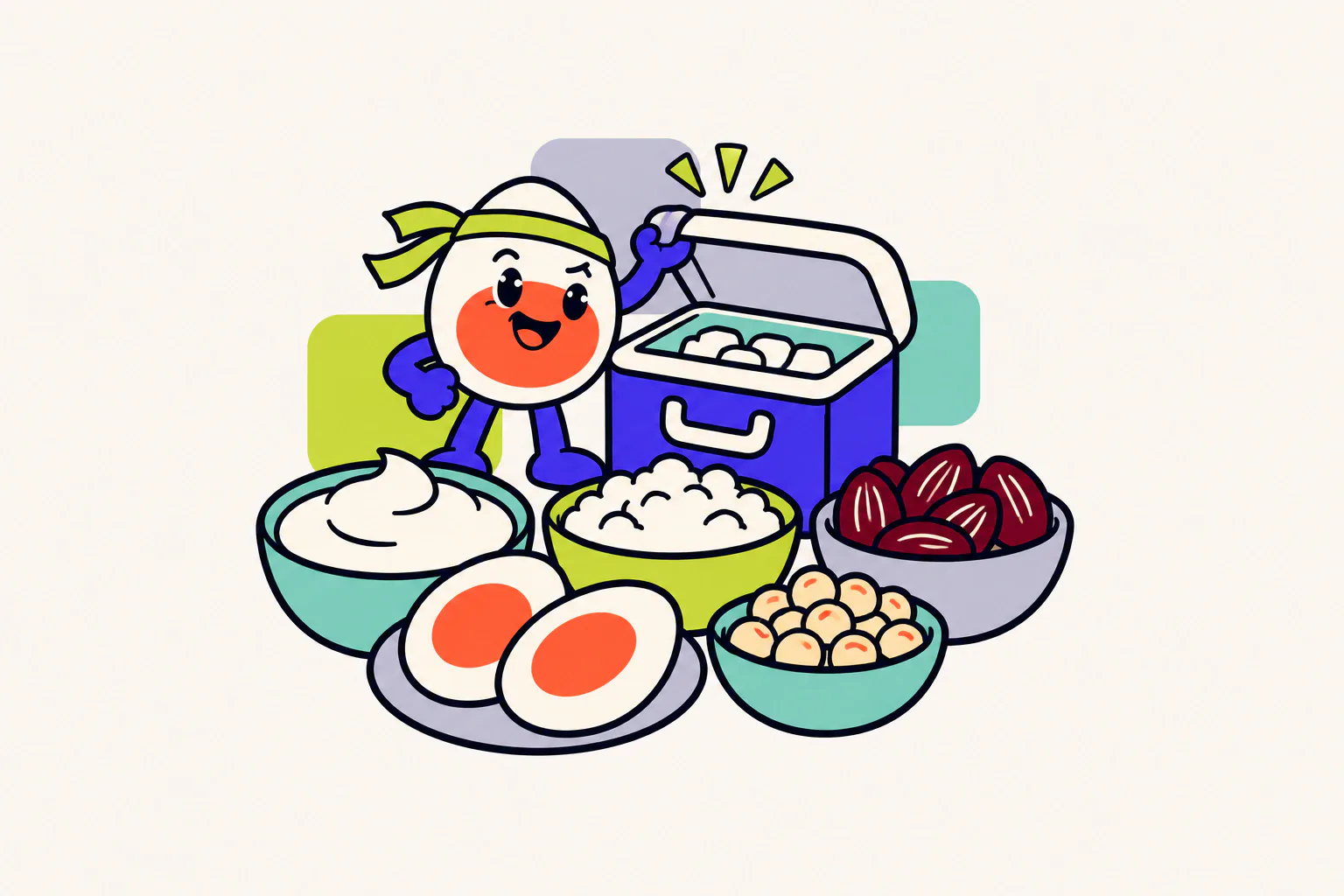
How much protein should a snack have?
The right size for a snack depends on your daily goal and on what your meals already supply. The RDA (Recommended Dietary Allowance) is the minimum that covers nearly all healthy adults: 0.8 grams of protein per kilogram of body weight per day (Institute of Medicine, 2005). That is 56 g a day for a 70 kg (154 lb) adult. The Dietary Guidelines for Americans 2025–2030, published by USDA and HHS in January 2026, set a higher protein goal of 1.2–1.6 grams of protein per kilogram of body weight per day, adjusting as needed based on your individual caloric requirements. For the same adult, that works out to 84–112 g a day. If three meals give about 25 g each, or 75 g, that leaves about 9–37 g for snacks and top-ups, which is why the lists below start small and go up.
Two rules of thumb help with snack size. Harvard Health Publishing (April 2024) suggests adding snacks with at least 5 g of protein on top of protein at every meal, and a Cleveland Clinic dietitian (Health Essentials, August 2026) says a snack of more than about 200 calories is becoming a mini-meal. This page sorts snacks into three sizes: 20 g or more, 10–19 g and 5–9 g. Those cut-offs are this page’s own, not an official standard. For your daily number, see how much protein you need or the protein calculator, and for why a spread across the day matters, read protein at every meal. For examples that put meals and snacks together, see the sample daily protein menus.
How were these numbers worked out?
Food protein and calorie figures come from USDA FoodData Central, SR Legacy, using the weight shown in each row. Protein is rounded to the nearest whole gram at 10 g or more and to one decimal below that; calories are rounded to the whole number. Combination snacks add up their parts. Protein bars, shakes, flavored yogurts, protein chips and roasted chickpeas have no row here, because their numbers vary by brand. Jerky, yogurt and cottage cheese vary by brand too, and one USDA entry stands in for each, so check the label. Reading a nutrition label for protein shows how to check yours.
Even a plain food can vary by product. USDA lists two entries for light tuna canned in water: about 19 g of protein in 100 g (FDC 173709) and about 26 g in 100 g (FDC 171986, no salt added, drained solids). The tables use the first, so the can in your hand may differ from the row. The 165 g is USDA’s household measure for one can of drained solids, not a label figure, so the protein in your can depends on the brand.
Which snacks give 20 g or more?
Three snacks reach this size: a can of light tuna, a cup of cottage cheese and a can of sardines. They give the most protein of any snack here, in 142–191 kcal, which is under the roughly 200-calorie mini-meal line, so they suit a long gap before the next meal. For per-can and per-fish numbers, see protein in canned sardines.
| Snack | Protein | Calories | Protein per 100 kcal |
|---|---|---|---|
| Tuna, light, canned in water, drained1 can (165 g) | 32 g | 142 kcal | 23 g |
| Cottage cheese, 2% milkfat1 cup (226 g) | 24 g | 183 kcal | 13 g |
| Sardines, canned in oil, drained1 can, 3.75 oz (92 g) | 23 g | 191 kcal | 12 g |
Which snacks give 10–19 g?
Dairy, eggs and edamame fill this middle group, and it is where most people will find an everyday snack. Plain nonfat Greek yogurt gives the most protein for its calories here. Fruit adds fiber and sweetness while the protein stays almost the same, as the yogurt and cottage cheese pairings show. The egg rows use hard-boiled large eggs; how much protein is in an egg covers other sizes. For sweet variations on yogurt and cottage cheese, see high-protein, low-calorie desserts. The guide to cottage cheese egg bites covers protein per bite and batch. For party portions, high-protein appetizers lists protein per piece and per bowl, with batch yields and serving guidance.
| Snack | Protein | Calories | Protein per 100 kcal |
|---|---|---|---|
| Edamame, shelled, prepared1 cup shelled, cooked (155 g) | 18 g | 188 kcal | 9.8 g |
| Greek yogurt with blueberries6 oz (170 g) yogurt + ½ cup (74 g) berries | 18 g | 142 kcal | 13 g |
| Greek yogurt, plain, nonfat1 container, 6 oz (170 g) | 17 g | 100 kcal | 17 g |
| Turkey and Swiss roll-ups2 oz (57 g) turkey + 1 slice (28 g) cheese | 16 g | 170 kcal | 9.4 g |
| Tuna on whole-wheat crackers2 oz (57 g) tuna + 6 crackers (28 g) | 14 g | 168 kcal | 8.3 g |
| Mozzarella string cheese2 sticks, 2 oz (57 g) | 13 g | 167 kcal | 8.1 g |
| Egg, hard-boiled2 large (100 g) | 13 g | 155 kcal | 8.1 g |
| Cottage cheese with pineapple½ cup (113 g) cottage cheese + ½ cup (83 g) pineapple | 12 g | 133 kcal | 9.2 g |
| Cottage cheese, 2% milkfat½ cup (113 g) | 12 g | 92 kcal | 13 g |
Which snacks give 5–9 g?
Cheese, eggs, jerky, milk, nuts and seeds fit this group, and most come in a portion that fits a pocket. The guide to protein in cheese covers slices, sticks and spoonfuls. Nuts and seeds carry the most calories for their protein: 1 oz (28.35 g) of almonds has about 6.0 g of protein and 164 kcal. Spreads add up too, since peanut butter on an apple reaches 286 kcal for about 7.6 g, above the roughly 200-calorie mini-meal line. Harvard Health Publishing advises keeping an eye on sodium in jerky. The table has no sodium column, so read the label on jerky, canned fish, cottage cheese, deli turkey and cheese. For a wider comparison, see low-sodium high-protein foods.
| Snack | Protein | Calories | Protein per 100 kcal |
|---|---|---|---|
| Beef jerky1 oz (28 g) | 9.4 g | 116 kcal | 8.1 g |
| Pumpkin seed kernels, roasted1 oz (28.35 g) | 8.5 g | 163 kcal | 5.2 g |
| Milk, 2%1 cup (244 g) | 8.1 g | 122 kcal | 6.6 g |
| Soy milk, original1 cup (243 g) | 7.9 g | 131 kcal | 6.1 g |
| Peanut butter on apple2 tbsp (32 g) + 1 medium apple (182 g) | 7.6 g | 286 kcal | 2.7 g |
| Peanuts, dry-roasted1 oz (28.35 g) | 6.9 g | 166 kcal | 4.1 g |
| Mozzarella string cheese1 stick, 1 oz (28 g) | 6.7 g | 84 kcal | 8.1 g |
| Cheddar cheese1 slice, 1 oz (28 g) | 6.4 g | 113 kcal | 5.7 g |
| Egg, hard-boiled1 large (50 g) | 6.3 g | 78 kcal | 8.1 g |
| Almonds1 oz (28.35 g) | 6.0 g | 164 kcal | 3.7 g |
| Pistachios, raw1 oz (28.35 g) | 5.7 g | 159 kcal | 3.6 g |
Which common snacks have less protein than you might expect?
Hummus, whole-wheat crackers, popcorn and an apple are reasonable snacks, but each gives about 3 g of protein or less in the portions below. Cleveland Clinic Health Essentials (August 2026) says healthy high-protein snacks typically pair protein with fiber. In practice, these foods work best as the base for a protein add-on rather than as the protein itself, and a slice of cheese with the crackers or peanut butter on the apple turns a low-protein snack into one from the tables above.
| Snack | Protein | Calories | Protein per 100 kcal |
|---|---|---|---|
| Whole-wheat crackers6 crackers (28 g) | 3.0 g | 120 kcal | 2.5 g |
| Popcorn, air-popped3 cups (24 g) | 2.9 g | 92 kcal | 3.1 g |
| Hummus2 tbsp (30 g) | 2.3 g | 71 kcal | 3.3 g |
| Apple1 medium (182 g) | 0.5 g | 95 kcal | 0.5 g |
Which snacks give the most protein for the fewest calories?
Calories are optional information: you can use the portion and protein columns alone. If you have a history of disordered eating, skip calorie counting and talk to a clinician; is counting calories healthy? covers the concerns, and tracking protein without counting calories offers another approach.
Protein per 100 kcal is the grams of protein for every 100 calories (kcal) on a food label. It shows which snack gives the most protein from a small calorie budget. Eight snacks in this list stay at or under 150 kcal and give at least 8 g per 100 kcal. Light tuna leads with about 23 g per 100 kcal, and nonfat Greek yogurt follows with about 17 g.
| Snack | Protein per 100 kcal | Protein | Calories |
|---|---|---|---|
| Tuna, light, canned in water, drained1 can (165 g) | 23 g | 32 g | 142 kcal |
| Greek yogurt, plain, nonfat1 container, 6 oz (170 g) | 17 g | 17 g | 100 kcal |
| Cottage cheese, 2% milkfat½ cup (113 g) | 13 g | 12 g | 92 kcal |
| Greek yogurt with blueberries6 oz (170 g) yogurt + ½ cup (74 g) berries | 13 g | 18 g | 142 kcal |
| Cottage cheese with pineapple½ cup (113 g) cottage cheese + ½ cup (83 g) pineapple | 9.2 g | 12 g | 133 kcal |
| Egg, hard-boiled1 large (50 g) | 8.1 g | 6.3 g | 78 kcal |
| Beef jerky1 oz (28 g) | 8.1 g | 9.4 g | 116 kcal |
| Mozzarella string cheese1 stick, 1 oz (28 g) | 8.1 g | 6.7 g | 84 kcal |
Nuts and seeds sit at the other end. 1 oz (28.35 g) of dry-roasted peanuts has about 4.1 g of protein per 100 kcal, and almonds about 3.7 g. They still earn a place because they need no fridge and no prep. A high ratio is not a ranking of health, only a way to see the trade. If you are cutting calories, protein for weight loss explains how protein fits in, and the high-protein foods chart compares more foods per serving and per 100 kcal.
Which snacks travel without a fridge?
Shelf-stable snacks ride in a bag, while cold ones need a cooler or a fridge within reach. The CDC’s guidance on preventing food poisoning (November 2025) says to never leave perishable food out for more than 2 hours (or 1 hour if exposed to temperatures above 90°F). Dairy, eggs, deli meat and any opened can of fish are perishable, so a lunch box with an ice pack is one easy way to carry them.
- Fine in a bag: unopened tuna and sardines labeled for shelf storage (once opened, treat them like any perishable food), shelf-stable beef jerky, nuts, seeds, peanut butter with an apple, and whole-wheat crackers. Follow each package’s storage directions, including after opening (USDA FSIS, 2024).
- Keep cold: Greek yogurt, cottage cheese, string cheese, cheddar, hard-boiled eggs, turkey roll-ups, milk and cooked edamame. For soy milk, hummus and other foods not listed, follow the label.
Which snacks fit more than one dietary restriction?
Plain edamame, pumpkin seeds and chickpeas offer plant-based starting points when you avoid dairy and nuts. Use the matrix to match several needs at once: “vegetarian” here allows dairy and eggs but excludes fish and meat; “plant-only” excludes all animal ingredients. The ingredient columns describe the plain foods named in USDA SR Legacy (2018), not an allergy-safety certification for any package. Seasonings and added ingredients can change the match.
| Plain snack and edible portion | Protein, about | Plant-only / vegetarian | Milk / peanuts or tree nuts / fish as ingredients | Storage for carrying |
|---|---|---|---|---|
| Edamame, prepared, shelled1 cup (155 g), cooked edible beans | 18 g | Yes / Yes | No / No / No; contains soy | Keep cold after cooking |
| Chickpeas, boiled, no salt½ cup (82 g), cooked edible beans | 7.3 g | Yes / Yes | No / No / No | Keep cold after cooking |
| Pumpkin seed kernels, roasted, no salt1 oz (28.35 g), edible kernels | 8.5 g | Yes / Yes | No / No / No | Dry, sealed pack; follow storage label |
| Peanut butter, smooth, no salt2 tbsp (32 g) | 7.1 g | Yes / Yes | No / Yes, peanut / No | Follow label; some need refrigeration after opening |
| Peanuts, dry-roasted, no salt1 oz (28.35 g) | 6.9 g | Yes / Yes | No / Yes, peanut / No | Dry, sealed pack; follow storage label |
| Greek yogurt, plain, nonfat6 oz (170 g) | 17 g | No / Yes | Yes / No / No | Keep cold, including unopened |
| Eggs, hard-boiled2 large (100 g), shells removed | 13 g | No / Yes | No / No / No; contains egg | Keep cold |
| Light tuna, canned in water1 can (165 g), drained solids | 32 g | No / No | No / No / Yes | Shelf-stable can only while unopened; keep cold after opening |
Allergy checks apply to every selection: read the ingredient list, any “Contains” statement and cross-contact information each time you buy. FDA’s 2023 label guidance explains that allergens can be declared within ingredients without a separate “Contains” statement, and precautionary warnings are voluntary. No warning does not guarantee no cross-contact. If unsure, ask the manufacturer and follow your allergist’s plan. For portion calculations, use reading a nutrition label for protein.
Which high-protein snacks need no fridge and no nuts?
Plain pumpkin seeds and unopened shelf-stable tuna are options without peanuts or tree nuts as ingredients; tuna also avoids dairy, while seeds offer a plant-only option. These are ingredient matches, so apply the allergy-label checks above before choosing a package. For either option, check protein and serving size on the label.
Storage depends on the product. USDA FSIS’s Shelf-Stable Food Safety guidance (2024) warns that some canned seafood requires refrigeration even before opening. Choose a can labeled for shelf storage, open it when ready to eat, and refrigerate leftovers. Keep seeds dry and follow their package directions. Yogurt, boiled eggs and cooked beans still need cold storage; a sealed container alone does not make them shelf-stable.
Which high-protein vegan snacks can you choose?
Prepared edamame is the higher-protein plant-only portion in the matrix; chickpeas, seeds, peanuts and peanut butter offer smaller amounts. For a vegan month or an everyday snack, you can choose cooked chickpeas with seasonings, shelled edamame, or peanut butter with fruit. The USDA portions show why “plant-based” alone does not tell you how much protein a snack supplies. For meals alongside snacks, see the high-protein vegan meal plan.
For snacks without nuts or dairy, start with plain chickpeas, edamame or pumpkin seeds and apply the allergy checks above; edamame contains soy. Keep the cooked beans cold and follow the seed packet’s storage directions. Roasted chickpea packets, flavored seeds and nut spreads can have different ingredients and portions: use the nutrition-label guide for the actual package rather than borrowing the boiled-chickpea values.
Does a high-protein snack reduce hunger?
One small trial found less hunger, but no difference in fullness. A 2014 randomized crossover trial in Nutrition Journal tested three 160 kcal afternoon snacks in 20 healthy women (mean age 27): a yogurt with 14 g of protein, high-fat crackers and high-fat chocolate. The yogurt reduced afternoon hunger more than the chocolate, and about 100 fewer kcal were eaten at dinner than after the chocolate. Fullness did not differ between snacks, and the dinner difference against the crackers did not reach statistical significance.
It was a single-day trial, hunger was self-reported, and it was funded by a food company that, the authors say, had no role in its design, implementation, analysis or interpretation. The snacks differed in more than protein, the group was small and all women were healthy, and the trial did not test the snacks in the tables above. In practice, one small trial hints that a protein snack may beat a low-protein, high-fat one at similar calories, not that any one food is a fix.
Who should check with a care team first?
If you have kidney disease or high blood pressure, are pregnant, manage diabetes or follow a medically supervised diet, talk to your care team or a dietitian before changing how much protein you eat. The numbers here are averages for healthy adults, not advice for a condition. If you are pregnant or breastfeeding, the FDA and EPA fish advice (content current as of March 2024) lists canned light tuna and sardines as “Best Choices” at 2–3 servings of 4 ounces a week, and albacore (white) tuna as a “Good Choice” at 1 serving a week; a whole can is more than one serving, so ask your care team how often canned fish fits. Peanuts, tree nuts, milk, eggs, soy, fish and wheat are common food allergens: if you have an allergy, skip those rows and follow your allergist’s advice.
What should you do next?
Pick one cold snack and one shelf-stable snack from the tables and keep both within reach, for example Greek yogurt at home and an unopened shelf-stable can of tuna or a bag of nuts in your bag; follow package storage directions. For add-ons to meals you already eat, see easy ways to add about 10 grams of protein, and for a first meal that already lands high, see 30-gram protein breakfasts.
YolkPal is an iPhone protein tracker: protein first, calories only if you want them. For packaged snacks you can scan a barcode or let it read a nutrition label, and foods you eat often can be saved for quick logging. AI results are estimates that you check and edit before saving. To start tracking, read how to track protein without counting calories.
Sources
- Institute of Medicine. Dietary Reference Intakes for Energy, Carbohydrate, Fiber, Fat, Fatty Acids, Cholesterol, Protein, and Amino Acids. National Academies Press, 2005. doi:10.17226/10490
- Ortinau LC, Hoertel HA, Douglas SM, Leidy HJ. Effects of high-protein vs. high-fat snacks on appetite control, satiety, and eating initiation in healthy women. Nutr J 2014;13:97. doi:10.1186/1475-2891-13-97
- U.S. Department of Agriculture and U.S. Department of Health and Human Services. Dietary Guidelines for Americans, 2025–2030. January 2026. realfood.gov/documents/DGA.pdf
- Harvard Health Publishing. High-protein snacks to build muscle and keep hunger at bay. April 18, 2024. harvardhealth.org
- Cleveland Clinic Health Essentials. 9 Healthy High-Protein Snacks To Help Keep You Full and Fueled. August 27, 2026. health.clevelandclinic.org
- Centers for Disease Control and Prevention. Preventing Food Poisoning. Page dated November 24, 2025. cdc.gov
- U.S. Food and Drug Administration and U.S. Environmental Protection Agency. Advice About Eating Fish. Content current as of March 5, 2024. fda.gov
- U.S. Food and Drug Administration. Have Food Allergies? Read the Label. Content current as of January 10, 2023. fda.gov
- USDA Food Safety and Inspection Service. Shelf-Stable Food Safety. Updated October 24, 2024. fsis.usda.gov
- USDA FoodData Central, SR Legacy (April 2018): FDC 173757, 173709, 172182, 175139, 170894, 171711, 168411, 172941, 171251, 172749, 173424, 171244, 169124, 167536, 170557, 171267, 172446, 172470, 171688, 173806, 173414, 170567, 170184, 174289, 170246, 171986. fdc.nal.usda.gov
This article is general information, not medical advice. If you have a health condition, are pregnant, or follow a diet set by your doctor, talk to them or a registered dietitian before changing how you eat.